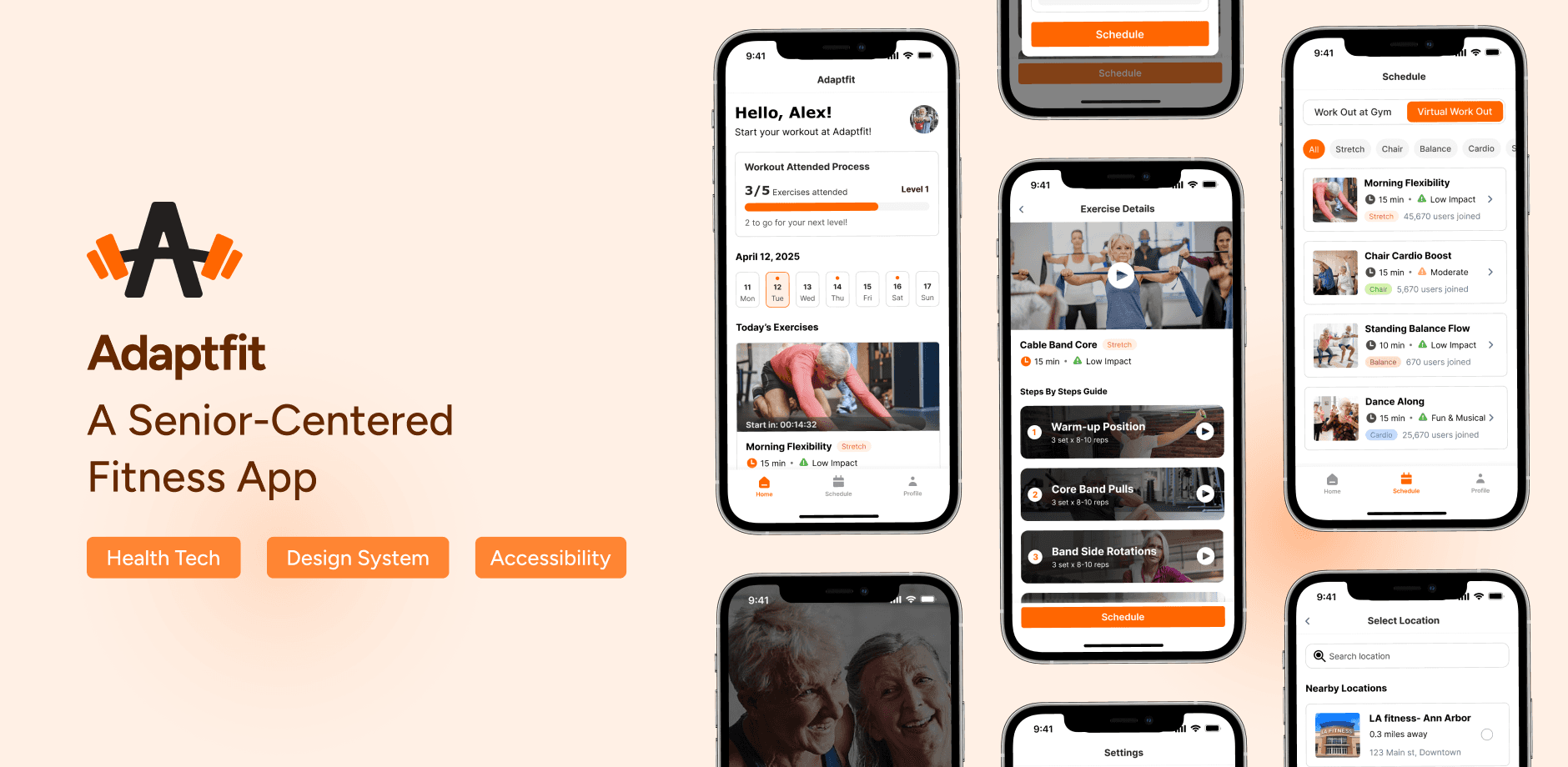
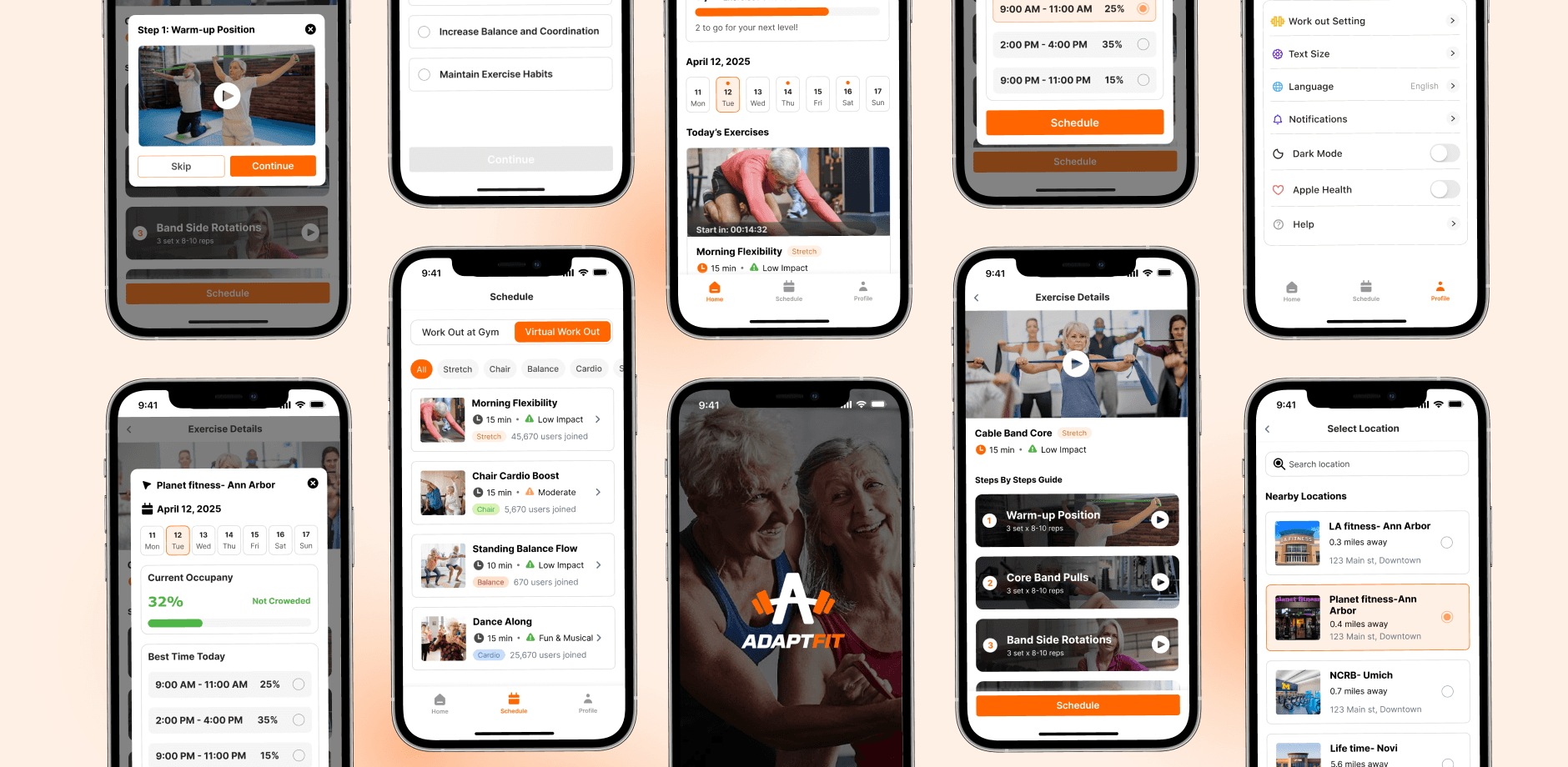
A mobile fitness application designed to support older adults in maintaining an active lifestyle. Adaptfit offers personalized low-impact workouts, guided video sessions, easy scheduling, and community features, all optimized for accessibility and simplicity.
ROLE
UI/UX Designer
TEAM
UX Designer* 2
Product Manager
Fronted Engineers
DOMAINS
System Design
Visual Design
UX research
TOOLS
Figma
Adobe Illustrator
Adobe Photoshop
TIMELINE
7 Weeks
Background
Physical Limitations Contribute to Staying Home
Older adults often experience motor and mobility issues such as loss of muscle strength and chronic conditions that make traditional exercise difficult. For example, sarcopenia (age‑related muscle loss) may affect up to 50 % of people over age 80, contributing to frailty and reduced ability to engage in physical activity.
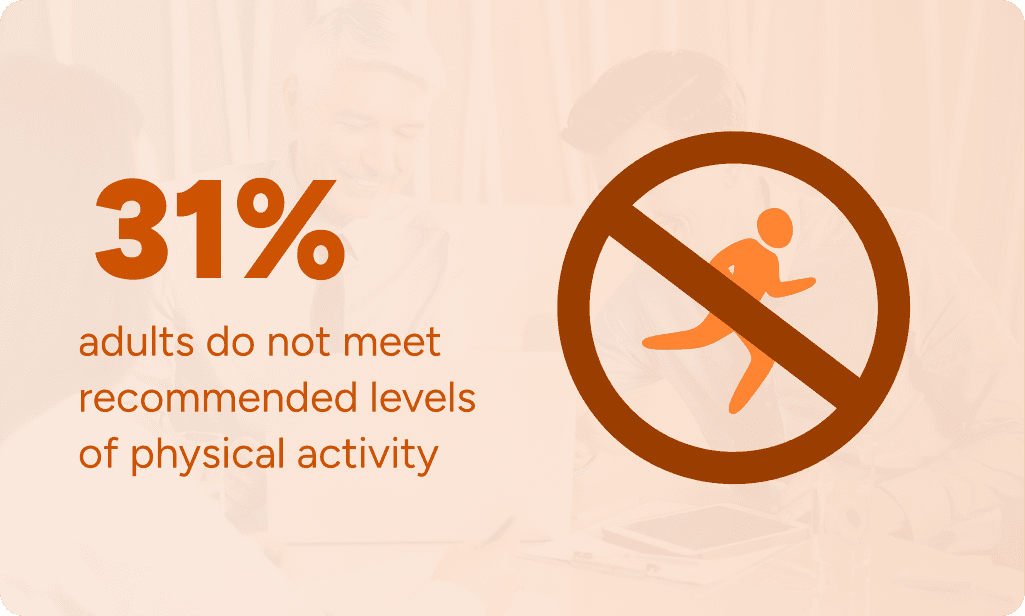
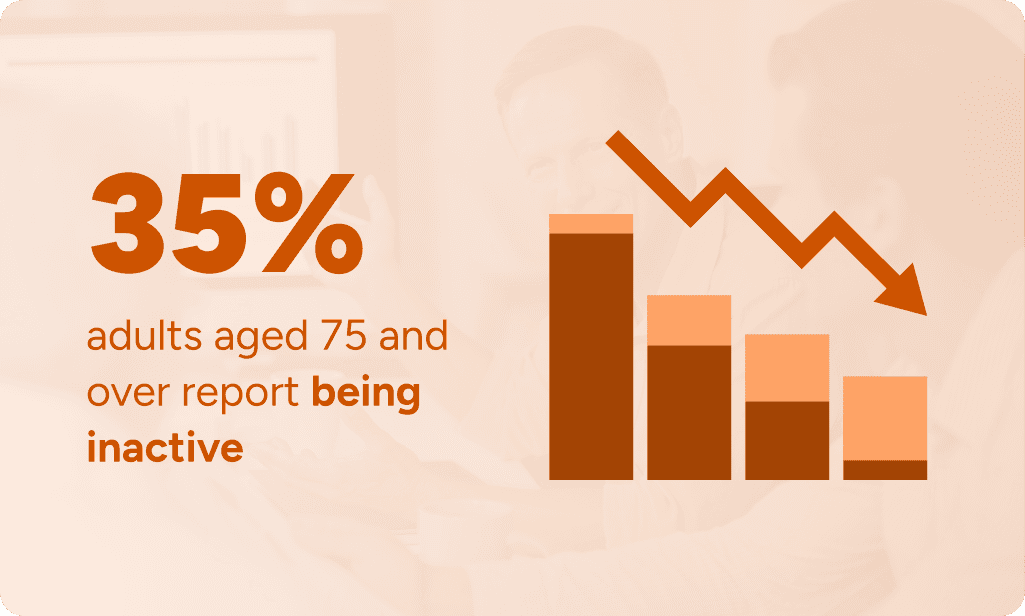
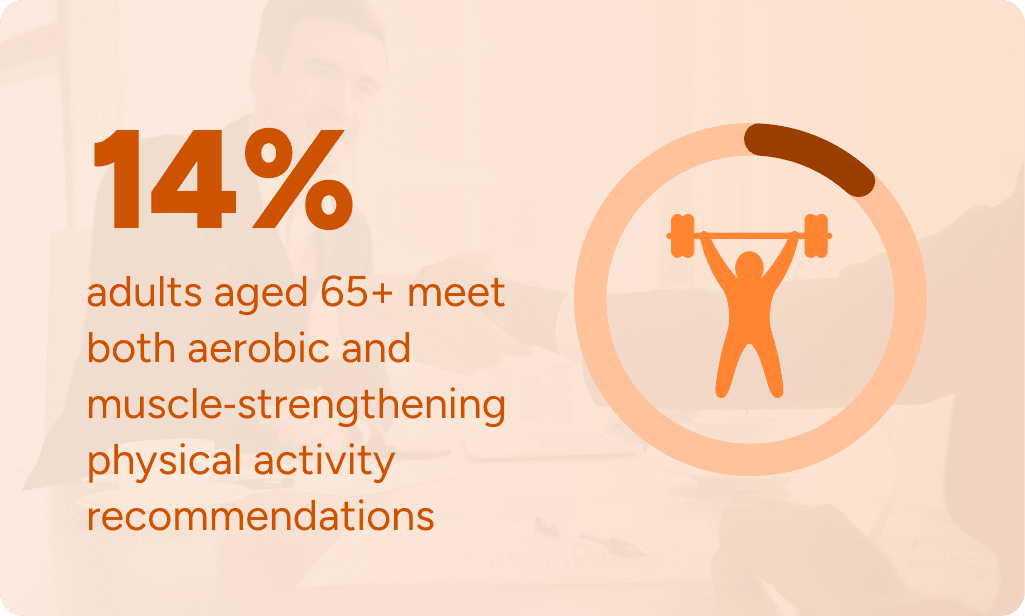
And social isolation and anxiety can impact physical activity
Through user interviews with adults over 50, we uncovered that:
Social disengagement and loneliness are closely linked to reduced physical performance and mobility.
Psychological concerns like fear of judgment, aging appearance, or feeling “too old” to participate lead to lower motivation to stay active.
“I know exercise is important, but I don’t feel confident in my shape. I’m afraid I’ll look awkward or slow compared to others, and that makes me anxious about going out.”
— Female user, early 60s
How might we
design or improve a fitness experience that helps older adults overcome social anxiety and self-doubt, so they can stay active, rebuild confidence, and improve their physical well-being?
What we build with Adaptfit:
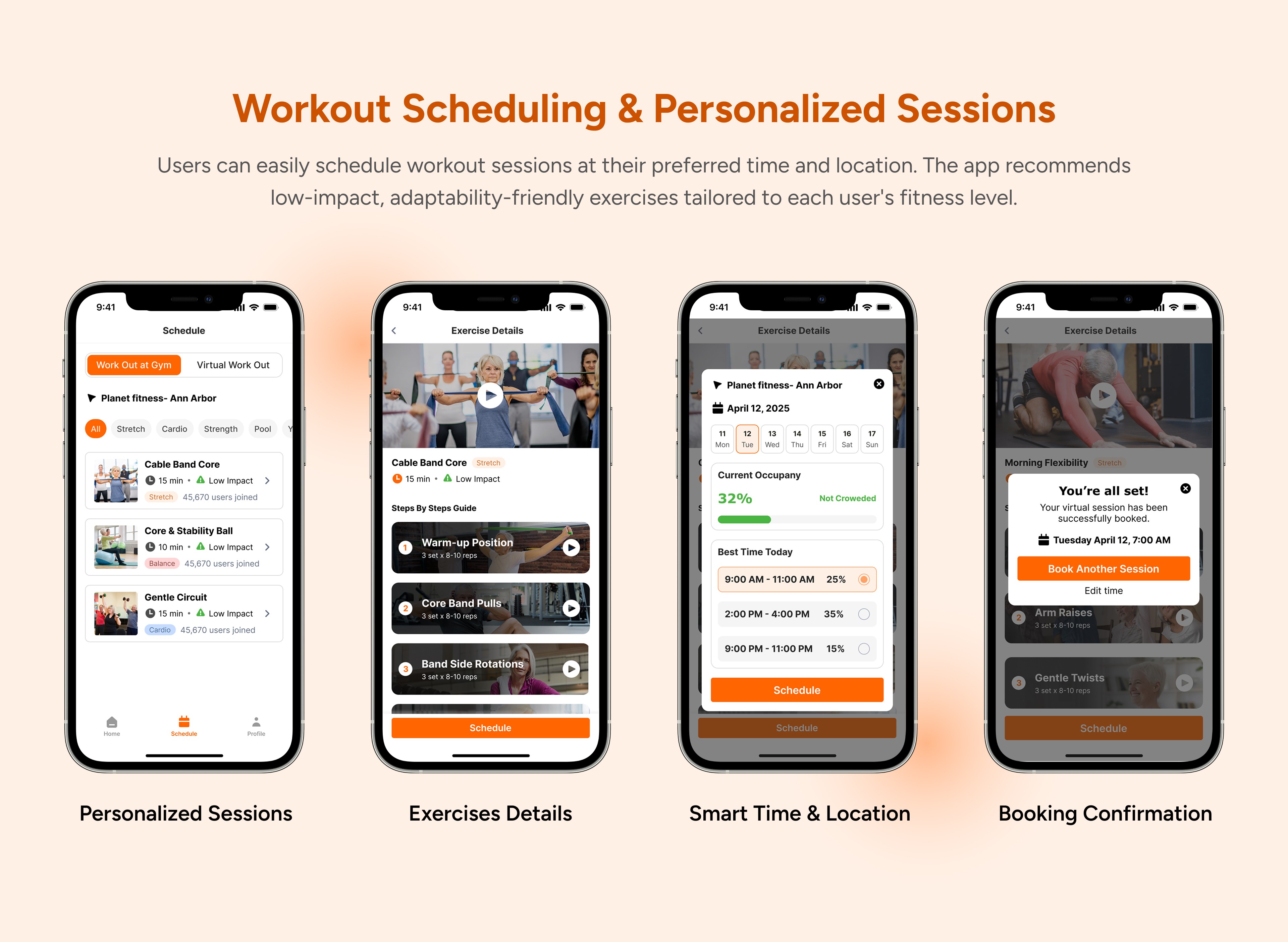
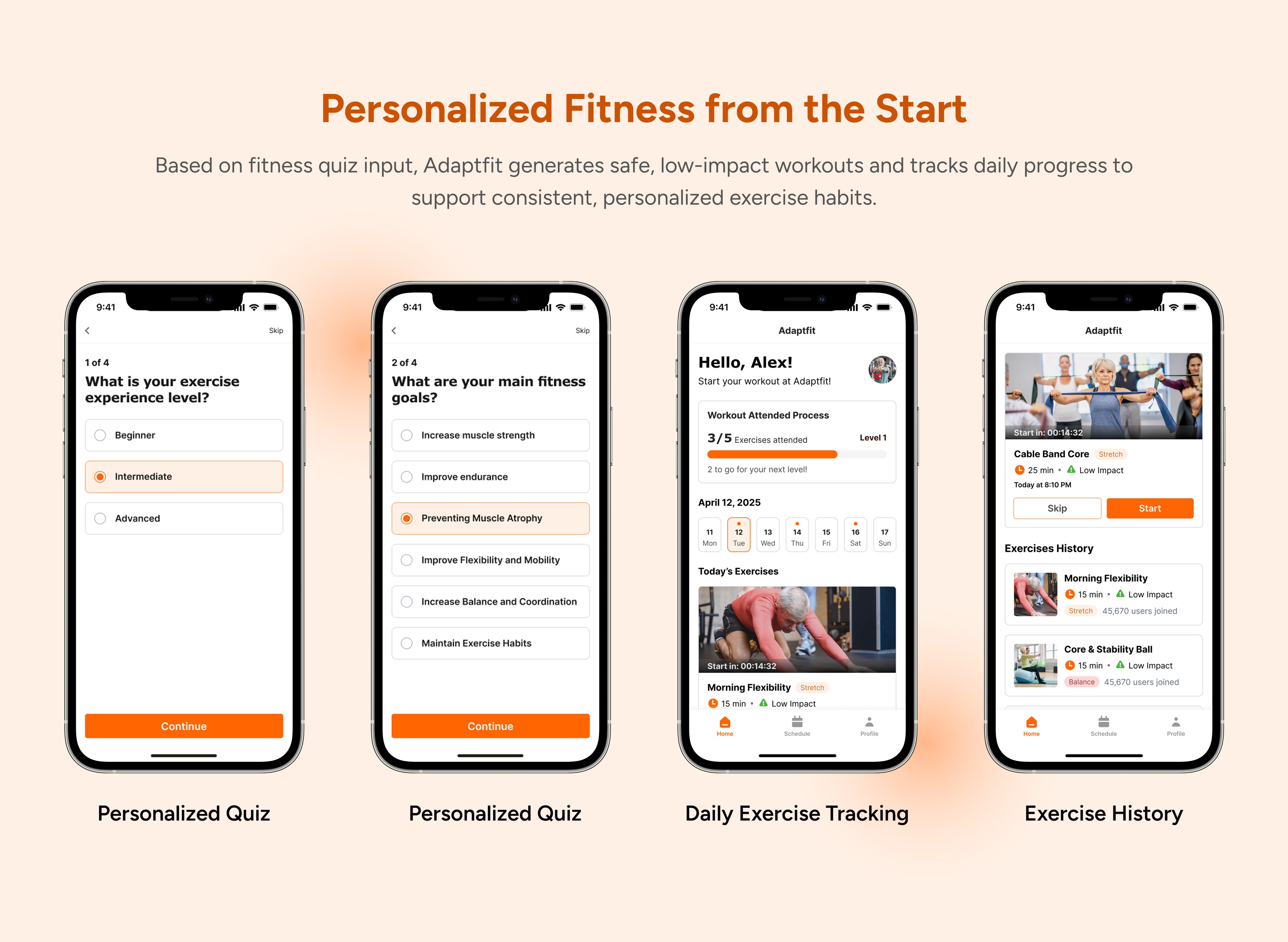
After uncovering key physical and emotional barriers, our team decided to design an application that would:


{ Final Design & Key Features }
Challenge 01
How might we help older adults build confidence and reduce anxiety
around fitness and exercise?
Our Initial Approach
“Social Workout Invitations” vs “Gamified Encouragement”
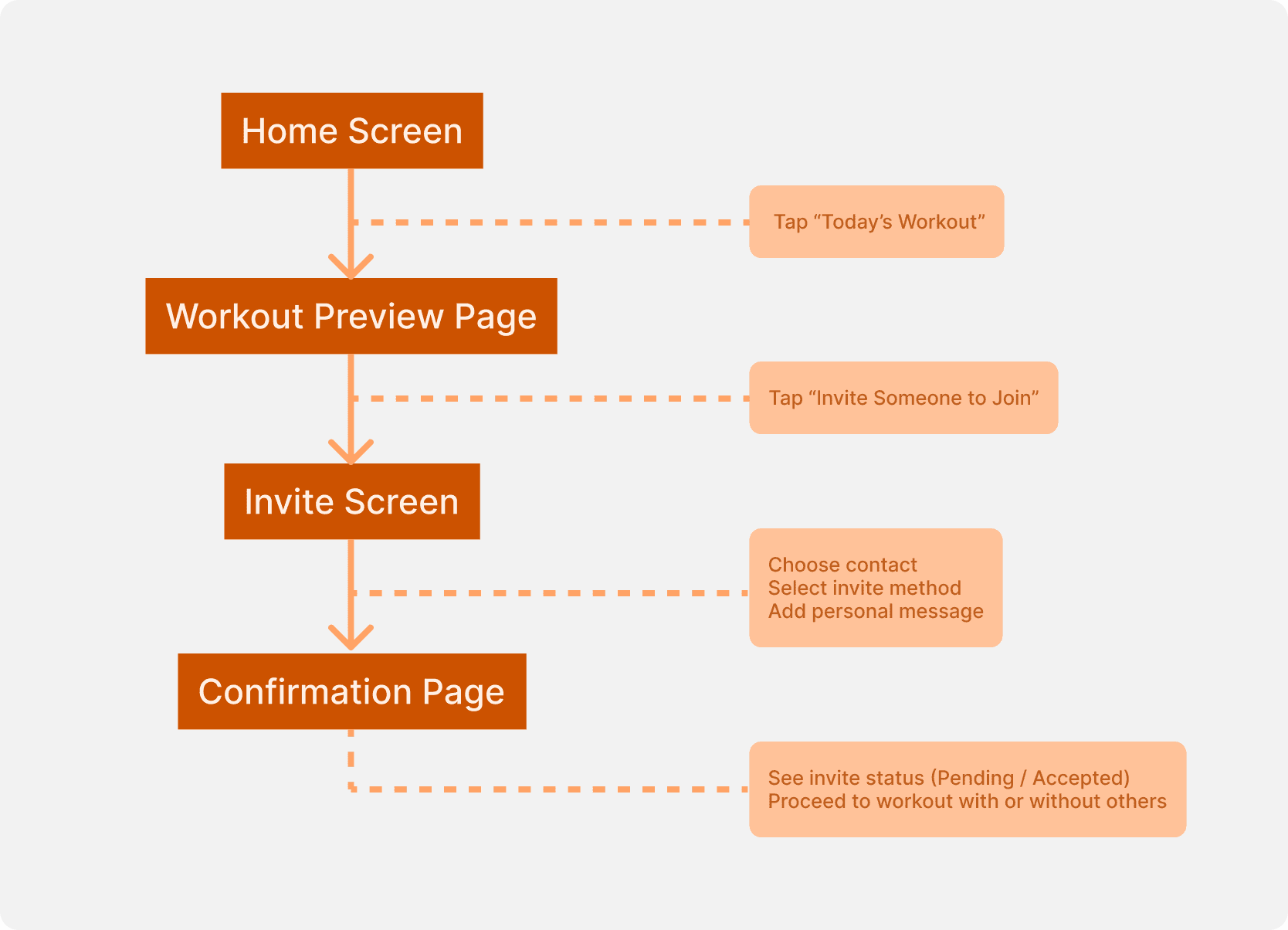
Solution 1: Social Workout Invitations
Allow users to invite friends or family to join workout sessions for added support and motivation.
This social component creates emotional support, reduces feelings of isolation, and helps users feel more confident and motivated.
Solution 2: Gamified Encouragement
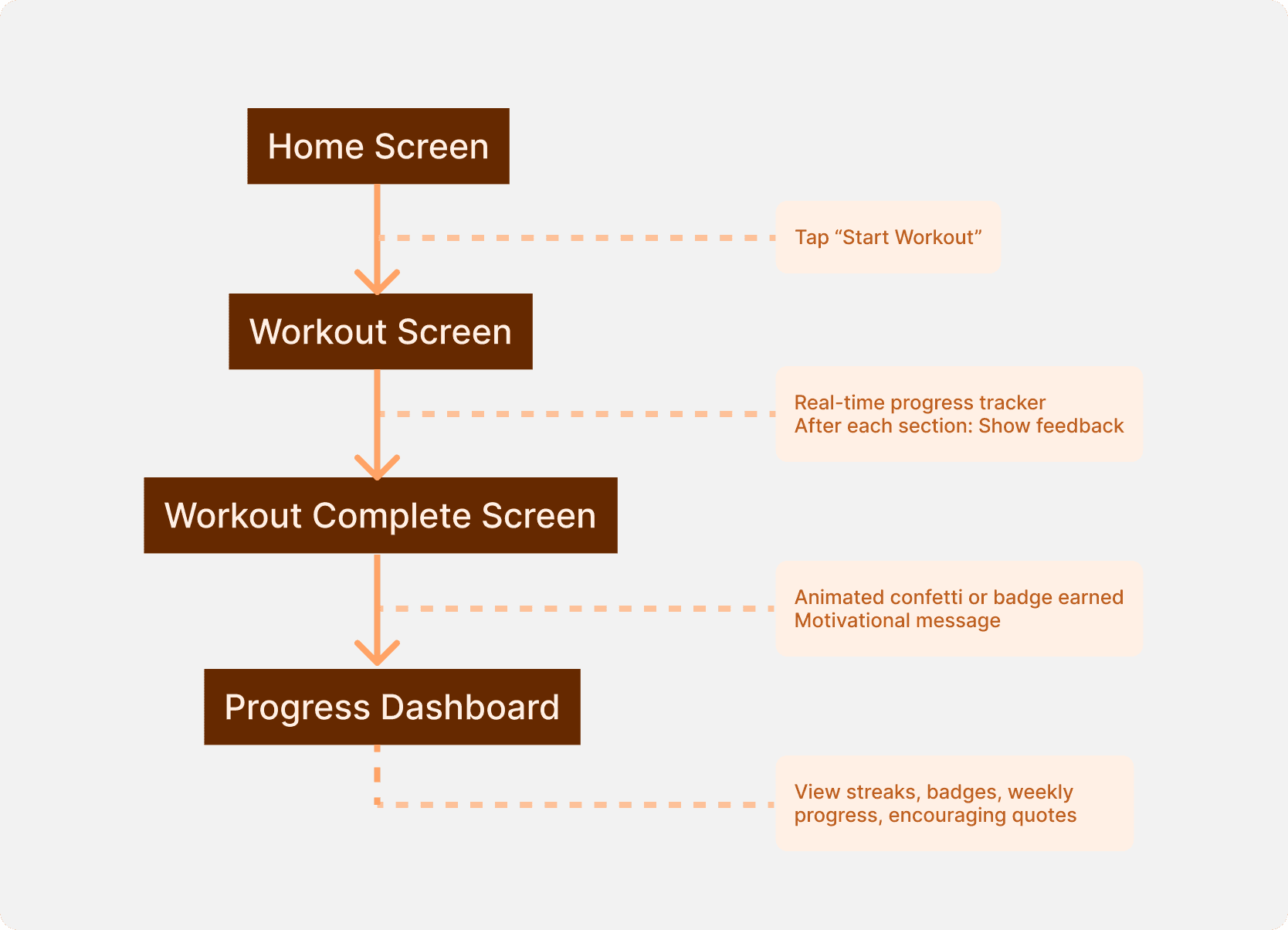
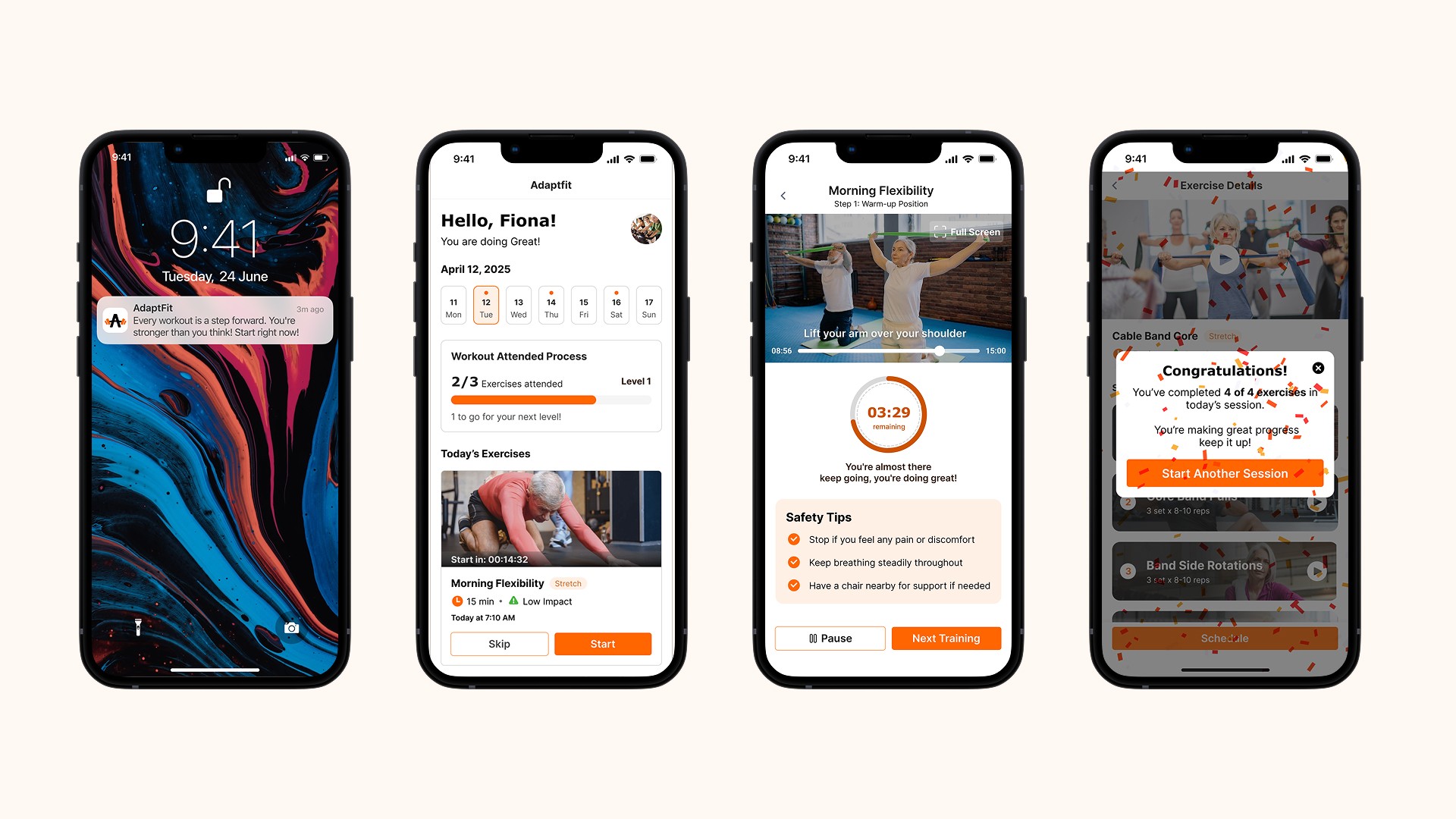
We introduced light gamification elements that track users’ workout progress visually.
Along the way, the app offers encouraging messages like “You’re doing great!” or “One step closer to your goal!” These small moments of positive reinforcement help users stay motivated and feel proud of their efforts at home or at the gym.
Final Solutions
Solution 2 was a Win
We compared both solutions from multiple perspectives and found that:
Users responded positively to visual progress indicators and motivational feedback, which boosted their confidence and made them feel acknowledged.
Ultimately, Solution 2 offered a more inclusive and universally accessible experience, aligning better with our goal of empowering older adults through small, sustainable moments of encouragement.
Challenge 02
How might we create an accessible experience goes beyond basic compliance to truly include and empower elderly users.
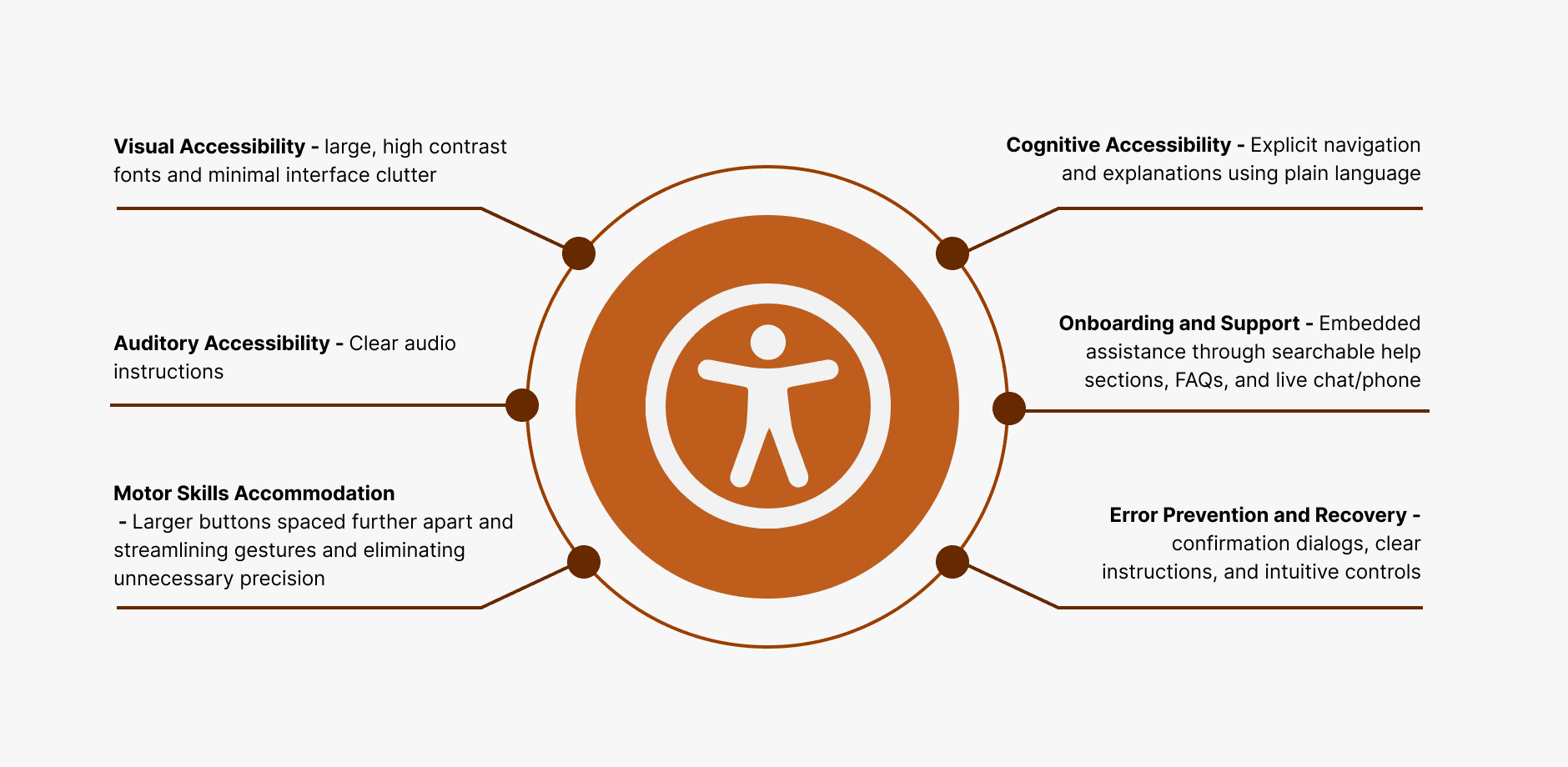
Accessibility Considerations
Before we started the wireframe, and based on the users interview, we listed any considerations which could benefit Adaptfit.
Solution 01
Listening mode on
Clear audio instructions can significantly enhance accessibility, especially for seniors who may struggle with reading small text or navigating complex interfaces.
To support this, we designed audio icon buttons that, when tapped, play spoken versions of the available options.
Solution 02
Improve Tutorial Video Experience
To address this, we introduced audio icon buttons that allow users to hear spoken descriptions of each step or option when tapped.
These voice-guided cues support users with visual impairments and enhance comprehension, making the tutorial experience clearer, more inclusive, and easier to follow.
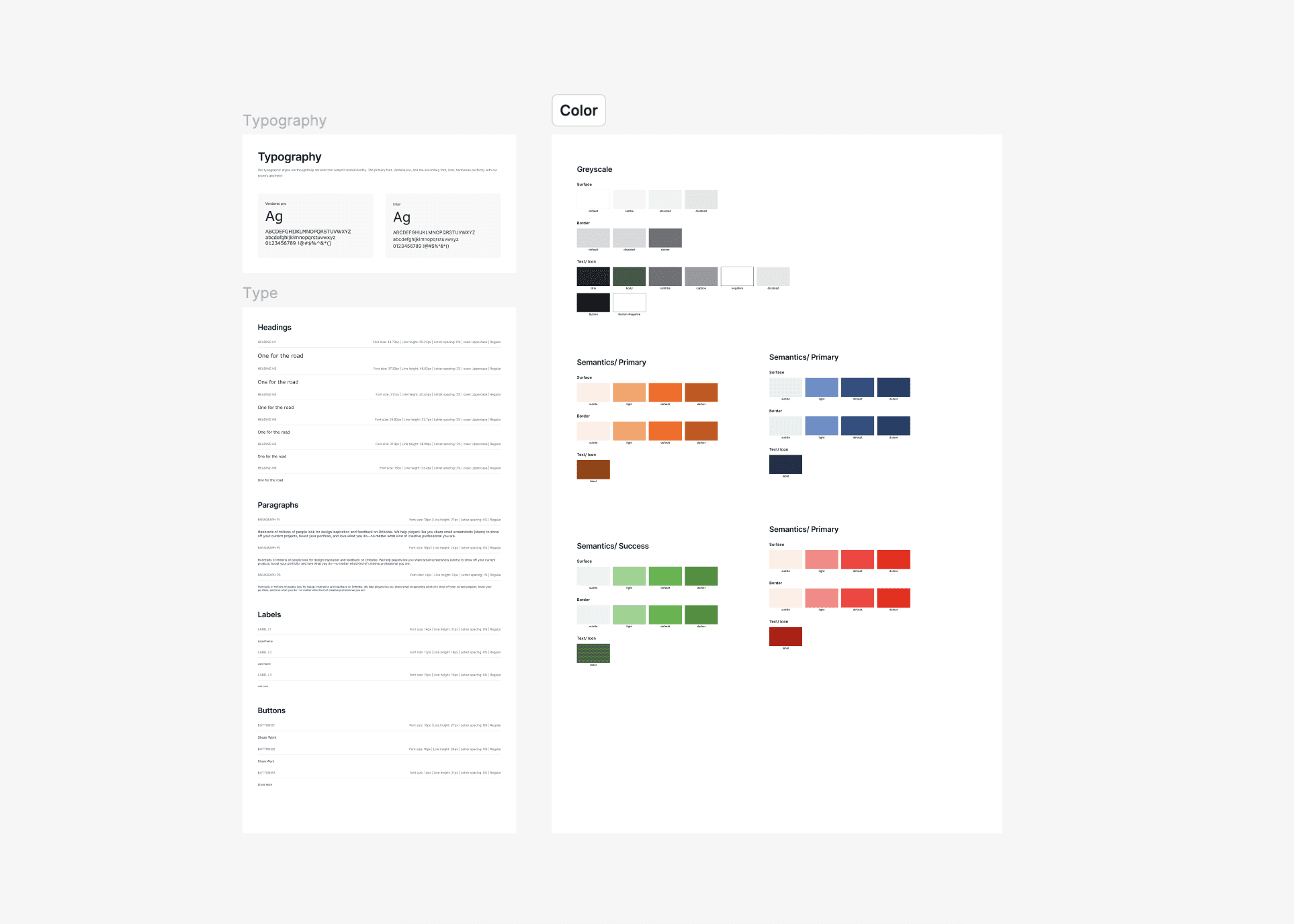
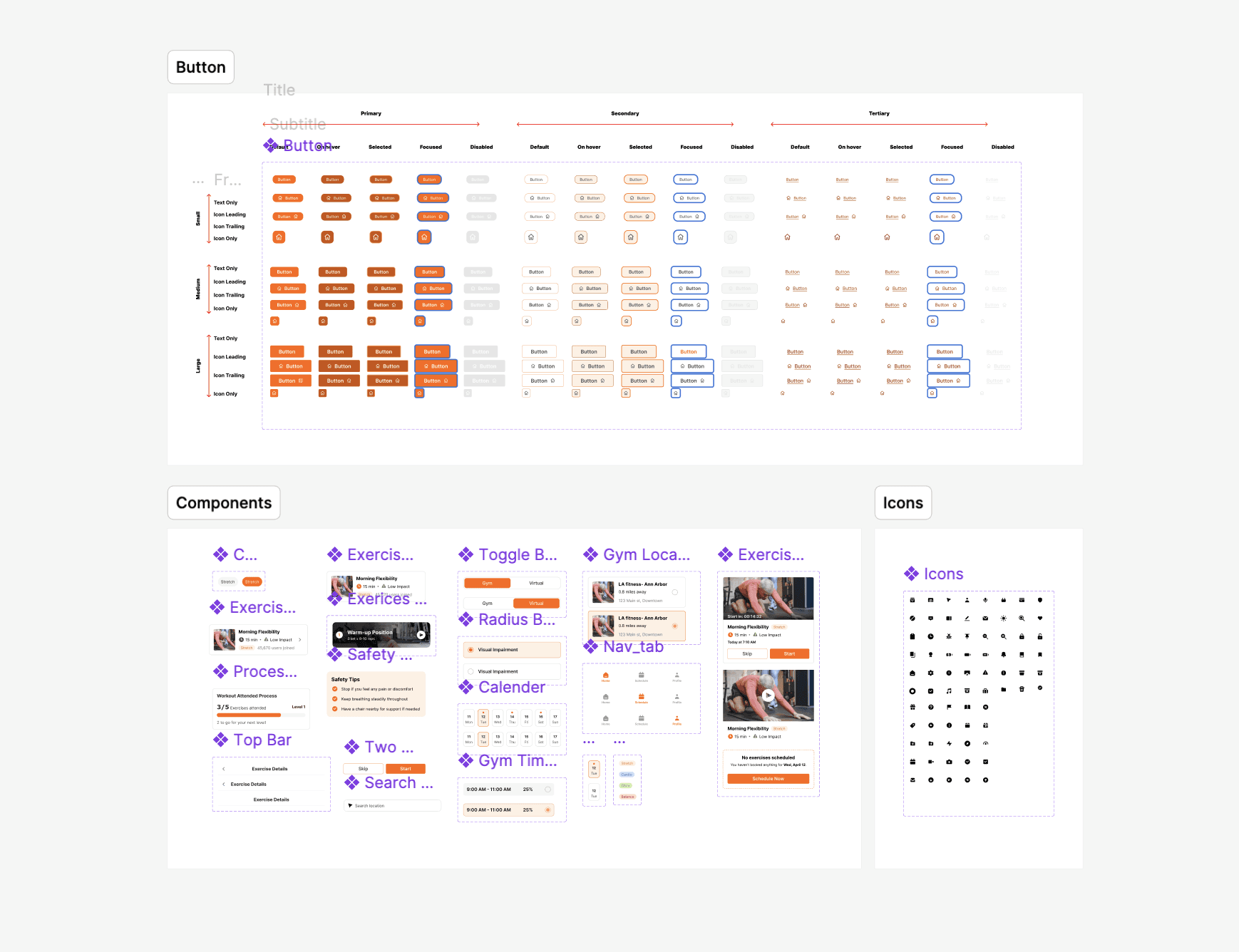
Design System 🧩
I created a design system that contained all the components and UI patterns used in the application.
Usability Testing
-Conduct user testing sessions with older adults to evaluate app usability in real-life scenarios.
-Gather feedback to refine interaction flows and improve user satisfaction.
Ensure Accessibility
-Audit the app using WCAG guidelines to ensure compliance and inclusivity.
-Enhance accessibility features to support users with varying physical and cognitive abilities.
Empowering Confidence Through Emotional Support
Many older adults experience anxiety or hesitation when it comes to going to the gym. This project highlighted the importance of building supportive, encouraging experiences that foster self-confidence and promote mental well-being alongside physical health.
Designing for Diverse Abilities Requires Holistic Thinking